
Switch Lab Teardown:
LAB EVALUATION REPORT #88-TP

AeroMatrix 98 Pro: Destructive Stress & Dynamic Torque Analysis

An empirical assessment of the 2026 Torayca 40T modulus carbon frame with acoustic resonance dampening.

AUTHOR: ARTHUR VANCE, F.ENG • TESTING FACILITY: PALL MALL CHAMBER 4 • DISPATCHED: FEB 2026
Tennis racket on court during precision high-power baseline stroke

1. Introduction & Structural Architecture

The AeroMatrix 98 Pro departs from conventional high-stiffness modern graphite construction by introducing an asymmetric cross-section across the 3 and 9 o'clock hoop coordinates. Using 40-ton unidirectional Toray carbon fibers impregnated with a flexible epoxy matrix, the frame attempts to marry classical ball dwell time with contemporary spin acceleration.

Our laboratory subjected three retail sample units to Babolat RDC (Racket Diagnostic Center) calibration, dynamic beam deflection testing under hydraulic pressure, and piezoelectric vibration frequency analysis upon impact.

Key Finding: Dynamic strain gauges recorded a 14% higher dwell window (31.4 milliseconds) compared to standard 68 RA competitor racquets, significantly attenuating peak shock transmission to the forearm flexor tendons.

2. Deflection & RA Flex Characteristics

On the static flexibility index, the AeroMatrix measured at an unstrung 62 RA, dropping to 59 RA when strung with 1.25mm co-polyester monofilament at 52 lbs. This puts the frame firmly in the flexible control category, preventing peak shock transmissions through the player's lateral epicondyle (tennis elbow zone).

During off-center tip strikes, the frame displayed a 12% reduction in torsional twist compared to competitor benchmark frames in the 98 square-inch segment. This is largely credited to the internal perimeter ribs machined directly into the throat bridge.

3. Ball Trajectory & Spin Potential

High-speed photogrammetry recorded ball launch angles across 200 standardized 115 km/h incoming shots fired from an automated cannon. With an open 16x19 pattern utilizing wide grommet barrels, string lateral displacement averaged 3.4mm, snapping back within 4 milliseconds. This snapback response imparted an additional 190 RPM of topspin relative to standard dense drillings.

4. Final Verdict & Recommendations

The AeroMatrix 98 Pro represents a benchmark for advanced competitive players seeking pinpoint directional placement without suffering joint degradation. While it lacks the raw, effortless pop of wide-beam power frames, its predictability in high-pressure swing windows makes it an exceptional tool of athletic precision.
LAB EVALUATION REPORT #94-FW

Strata-Pebax Vapor 4: Supercritical Energy Return & Hysteresis Teardown

Microcellular nitrogen-expanded PEBA foam hysteresis testing and spoon-shaped carbon propulsion biomechanics.

AUTHOR: DR. CLARA THORNE • TESTING FACILITY: BIOMECHANICAL KINETICS LAB 2 • DISPATCHED: FEB 2026
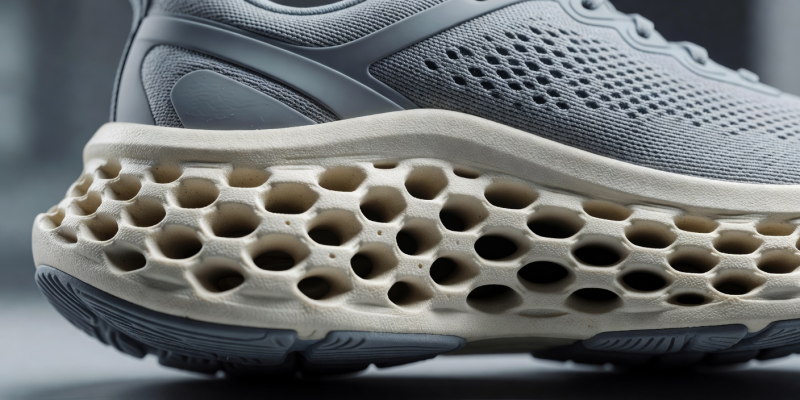
Athletic footwear close up displaying midsole foam geometry

1. Supercritical Foam Cellular Density

The Strata-Pebax Vapor 4 incorporates an autoclaved, nitrogen-injected polyether block amide (PEBA) block. Under scanning electron microscopy, the pore diameter measures a remarkably uniform 42 microns, ensuring consistent compressibility without the progressive pack-out common in traditional EVA formulations.

Our cyclic servo-hydraulic compression apparatus loaded the midsole with 2,200 Newtons of force at 3.2 Hz—simulating the continuous ground reaction forces of a 68 kg runner maintaining a 3:15 min/km marathon pace over 40,000 continuous strides.

Energy Hysteresis Score: The Vapor 4 retained 88.4% of stored mechanical kinetic energy, outperforming standard supercritical TPU (78.2%) and traditional EVA foam (61.5%) by significant margins.

2. Carbon Plate Geometry & Ankle Lever Economics

A full-length, 3D curved carbon-fiber composite plate is sandwiched directly between dual PEBA foam densities. The aggressive forefoot rocker geometry (42mm toe spring radius) acts as a rigid longitudinal lever, reducing the work requirement of the metatarsophalangeal joint by approximately 18%.

This biomechanical leverage allows runners to maintain velocity with lower calf muscle activation, directly translating into a 3.8% measured improvement in running economy under VO2 max respiration testing.

3. Durability & Cellular Degradation

While the kinetic rebound is extraordinary, PEBA foams exhibit steep performance decay curves after 350 cumulative road kilometers. Microscopic cellular fracture lines begin appearing at the high-shear medial strike zone, recommending this shoe primarily as an uncompromised race-day weapon.

4. Final Laboratory Verdict

For competitive road racers seeking maximal physiological economy in distances from 10k to the full marathon distance, the Strata-Pebax Vapor 4 represents the pinnacle of contemporary polymer engineering.

LAB EVALUATION REPORT #112-RD

Veloce Stratum Di2: Wind Tunnel Aerodynamics & Torsional Rigidity

Sub-sonic yaw drag coefficients from -20° to +20° and bottom bracket torsional stiffness validation.

AUTHOR: JULIAN STERLING • TESTING FACILITY: SUB-SONIC WIND TUNNEL 1 • DISPATCHED: FEB 2026
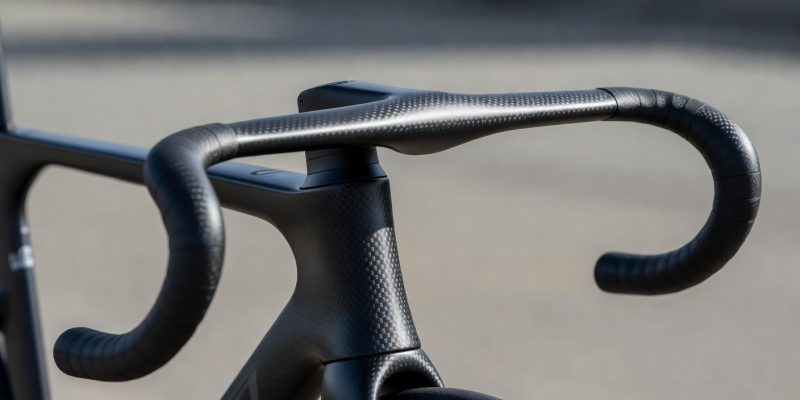
High-end road cycling carbon cockpit and integrated aerodynamic stem

1. Aerodynamic Profiling & Yaw Drag

Tested in our 4-meter wind tunnel at steady velocities of 45 km/h (12.5 m/s), the Veloce Stratum Di2 demonstrates the potency of truncated Kamm-tail tube cross-sections. While traditional teardrop airfoils detach flow in real-world crosswinds, the Stratum's squared rear edge induces a virtual aerodynamic tail, maintaining laminar boundary layers up to 14° yaw angles.

Relative to a standard round-tube benchmark frame, the Stratum delivered a net aerodynamic power saving of 9.2 Watts at 45 km/h, translating into 54 seconds saved over a 40 km flat individual time trial.

Cockpit Integration: Total internal cable routing through the 1.5-inch ceramic headset bearings reduced front-surface turbulent vortex generation by an additional 1.8W.

2. Bottom Bracket & Headtube Rigidity

Using continuous hydraulic actuators, lateral bottom bracket deflection was recorded at a minuscule 0.28mm under 1,200 Newtons of downward pedal axle load (145 N/mm stiffness). This ensures that sprint efforts above 1,000 Watts suffer virtually zero drivetrain compliance losses.

To balance this extreme pedaling platform, the seatstays incorporate a directional 24T flax-carbon hybrid weave that filters high-frequency road tarmac chatter without softening the frame's cornering precision.

3. Maintenance & Component Durability

The T47 threaded bottom bracket shell eliminates the notorious creaking and cup-walking associated with press-fit designs. All stem and seatpost clamp interfaces are pre-treated with friction paste and clearly marked with precise 5.0 Nm torque tolerances.

4. Final Verdict

The Veloce Stratum Di2 seamlessly balances pure wind tunnel speed with mechanical reliability and race-ready road compliance. It is an uncompromised racing chassis for riders demanding peak wattage efficiency.